

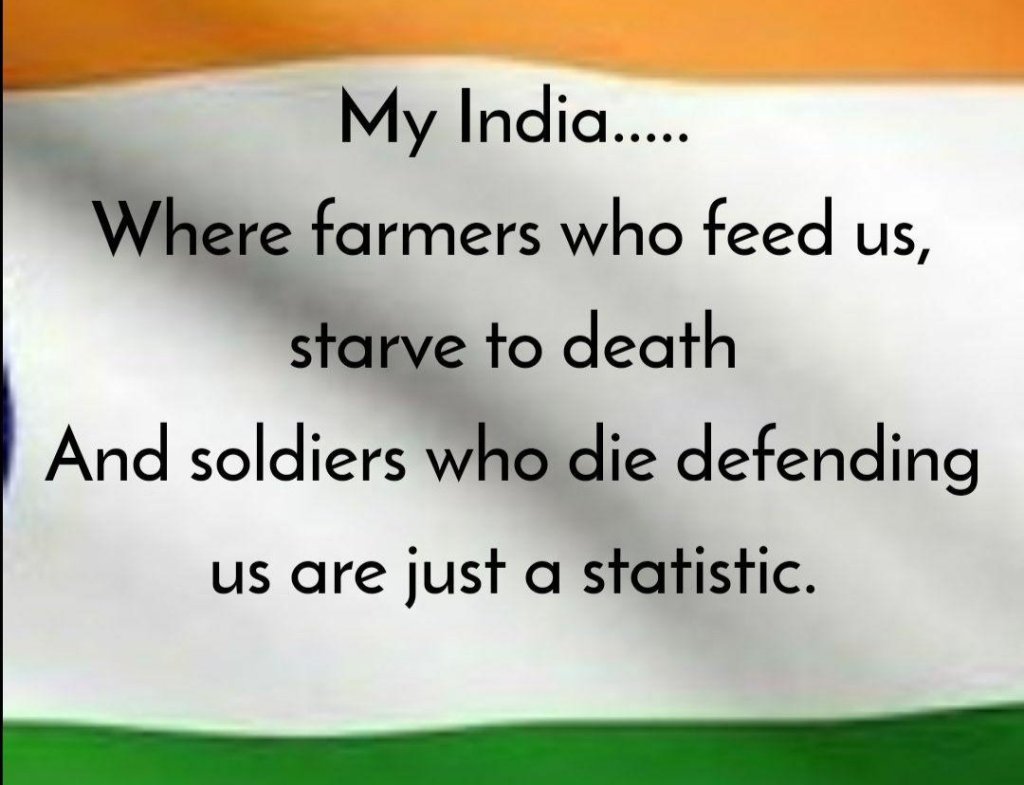
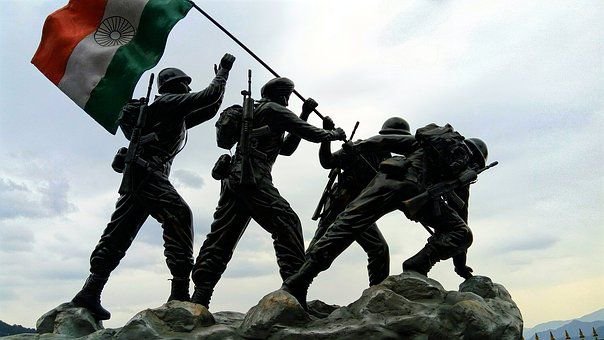
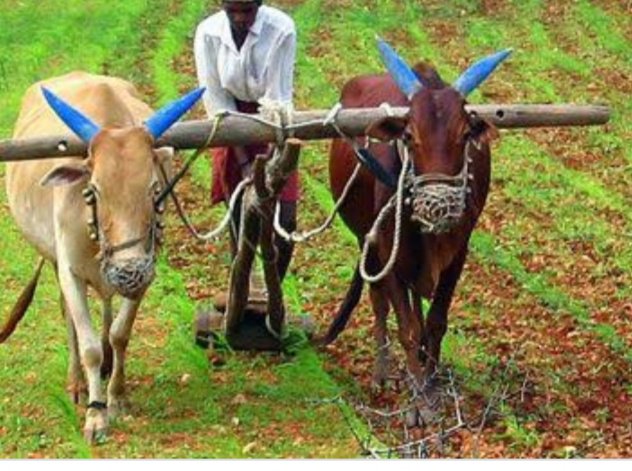
Bringing this theory to the Indian post-colonial economy, we find the very famous slogan of the second Prime Minister of India, Sri Lal Bahadur Shastri, ‘Jai Jawan Jai Kisan’, which at some level, tries and argues the same proposition. It was meant to correct the dependency created by colonialism.
On one hand, ‘kisan’, the farmer who takes care of the land by cultivating it and worshipping it. On the other hand, ‘jawan’, the soldier who takes care of the land by protecting it. Both kisan and jawan were primarily from villages. And in this way, he tried to strengthen the villages of India which form the periphery in the dependency model, so that they no longer needed to be dependent on the cities and metropoles. This would make India more self-sufficient and reduce its dependency in the global commodity market.
Gandhiji was very well versed with the fact that India lives in its villages, and hence his idea of “Oceanic Circles“, where he suggested making villages the core and the cities to be woven around like an ocean. But the present political climate of the Indian state has misunderstood or has yet not understood India. India is not limited to Hindutva. We need a more prosperous and powerful primary sector in India before ‘Make in India’.
And today, we are recklessly omitting portions from history books – portions which might have provided solutions to some of the most complex problems of global politics. There is a reason today that these measures to capitalise on and strengthen the cities more have failed. We can see an ilk of revolution in the form of farmer protests against demonetisaton – against policies which have severe effects on their lifestyles leading to high suicide rates.
Just going digital would not serve the purpose and goals India wants to achieve. To get access to the digital, one needs money, so sufficiency is firstly required and then we can think of going cashless. Today’s political climate has got India wrong.
Within the egotistic shroud of nationalism, we veil vigilantism that can be legitimised by the government. We need vigilance among people and need them to be critical of government policies. Dissent and opposition are the major pillars of democracy. But what we get instead is vigilantism and moral policing in the form of Salwa Judum, Love Jihad, Anti-Romeo Squads, Gau Rakshaks, etc. These groups lead to the grossest forms of human rights violation. A false sense of some reign of terror is being created.

 Site Title